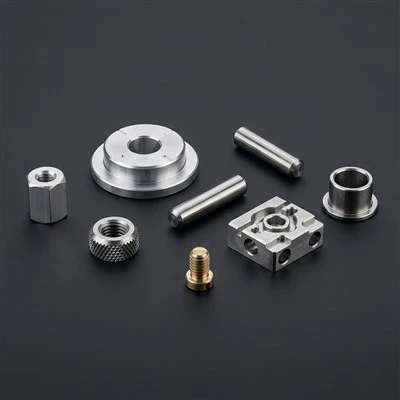
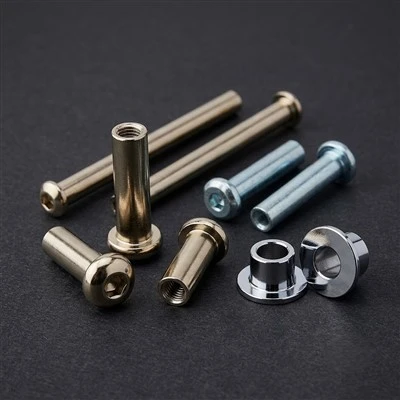
The operational stability, repeating positioning accuracy and long-term service life of industrial automation equipment are mainly determined by CNC precision machining accuracy, structural compatibility and material cutting stability of essential mechanical components. Automation modules, linear slides, transmission parts, tooling jigs, precision frame connection and other key hardware structural parts generally have thin walls, special-shaped structures, deep holes, high-precision matching positions and high dynamic load operating circumstances. Their requirements for machining accuracy, flatness, parallelism, coaxiality and batch interchangeability are much higher than the requirements for ordinary mechanical parts. Industrial automation CNC metal machining is a condition-oriented precision manufacturing, which is not the same as ordinary hardware machining. Automation equipment needs to develop exclusive material cutting methods, deformation control processes, mass production quality control standards for high frequency reciprocating, continuous vibration, and accurate positioning scenarios. The paper discusses the specific pain points in the machining industry, material adaptation process, micron-level precision control logic and mass production solutions in the component machining scenario of industrial automation equipment, and provides practical technical references for automation equipment manufacturers and non-standard automation system integrators.

1. CNC machining pain points in the industrial automation equipment industry
More than 90% of the failures of components in automation equipment, assembly jams, positioning deviations, anomalous operating sounds, and attenuation of module accuracy are caused by the mismatch between the machining methods at the front end and the working circumstances in industry. The pain points of the industry are caused by the general CNC machining process which could not adapt the special structures and dynamic load requirements of precision automation components. This is also the core requirements of the selection of precision machining suppliers by automation equipment manufacturers.
First, the uncontrolled deformation of hollow and thin-walled structures. It is generally utilized for light weight automation modules. Slide cover plates and vacuum adsorption jigs are thin-walled hollow construction with wall thickness of 0.8mm ~ 3mm. Traditional cutting settings are likely to lead to stress deformation, side wall warpage and flatness out-of-tolerance, which will cause uneven assembly gaps and machine operating jams. Secondly unsustainable micro level tolerance of matching position. The transmission bearing holes, the mounting position of the guide pillar and the guide sleeve, the positioning holes of the lead screw attaching base and the module docking reference surfaces normally have a tolerance of ±0.005mm to ±0.01mm. Batch processing is plagued with batch out-of-tolerance like thermal deformation, clamping faults and tool wear resulting to non-interchangeable components and increased equipment installation and commissioning cost. Third, Low structural stability under dynamic working condition. Due to the long-term high-frequency reciprocating operation of automated equipment, 3 ~ 6 months after the equipment is put into operation, the residual cutting stress in the parts will cause micro-deformation in the later stage, which will cause the attenuation of positioning accuracy and affect the yield stability of the equipment. Fourth, mixed multi-material process with unequal quality. Automation equipment is constructed from numerous materials, including aluminum alloy, stainless steel, carbon steel, and copper alloy. The big difference in processing settings and thermal expansion coefficients between different materials makes it difficult for general processing firms to achieve the same precision and appearance standards for diverse materials, affecting the consistency of the whole machine. Fifth, the mismatch between the precise dimension and the post-processing . Traditional surface treatment processes such as anodizing, sandblasting, passivation, etc., if not properly regulated, will result in dimensional changes at micron level, ruin the tolerance of precision matching position, and cause the trashing of approved products.
2. CNC Machining Processes for Core Components of Automation Equipment
The material of the component of automation equipment has a large variation in the requirements of material hardness, light weight, wear resistance, vibration resistance and corrosion resistance. We have developed an own library of cutting methods for the most popular automated metal materials. In accordance with the functional properties of the parts, the equipment speed, tool type, cutting feed rate, cooling mode and tool path logic are matched, so as to solve the machining faults from the source and adapt to the long-term dynamic working conditions of the equipment.
a. 6061/7075 Aluminum Alloy Lightweight Automation Parts Precision Machining
Automation modules, slide racks, jig base plates and shell connections are made of aluminum alloy. Among these, the 7075 aircraft aluminum is generally used for the high strength light load-bearing parts. Aluminum alloy has high thermal expansion coefficient, the propensity of tool adhesion and the susceptibility of thin-wall deformation, the usual high-speed machining is easy to generate tool marks, edge collapse and flatness deviation. The method of zonal layered cutting, micro multi-pass cutting and low temperature emulsion cooling was used for aluminum alloy automation parts in this paper. Specially engineered ultra-fine grain cemented carbide tools matched for aluminum processing prevent tool stickiness and cutting vibration marks. The post-processes like anodizing, hard anodizing and natural sandblasting are well suited for the standard post-processing processes of automation parts, such as anodizing, hard anodizing and natural sandblasting, and it balances lightweight performance with structural rigidity.
b. Wear-Resistant Transmission Parts-304/316 Stainless Steel and 45# Carbon Steel Processing
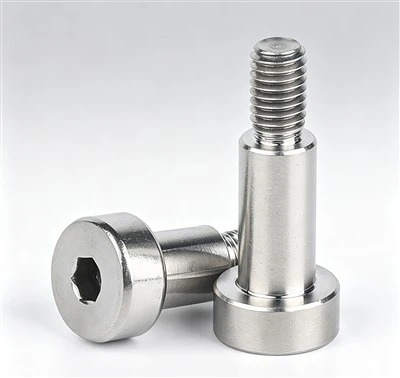
Stainless steel and carbon steel are often used to manufacture parts for automation systems subject to high loads, high wear and high stability. These materials are used for fixed bases, load bearing brackets, lead screw fixing seats, bearing seats and positioning pins. These materials are particularly hard and cut resistant and work harden easily and hence are difficult to cut in a conventional fashion resulting in unrounded holes, thread chipping and scratches on the surface. The cutting stress and work hardening are substantially decreased by adopting a low speed high torque way of cutting with coated wear resistant tools and progressive segmented cutting procedures. The coaxiality of holes, the perpendicularity of end faces and the accuracy of matching threads are strictly examined to ensure the long-time free of offset and free of looseness operation of transmission components under severe load.
c. Machining of precision connecting parts in H59/H62 brass conductive
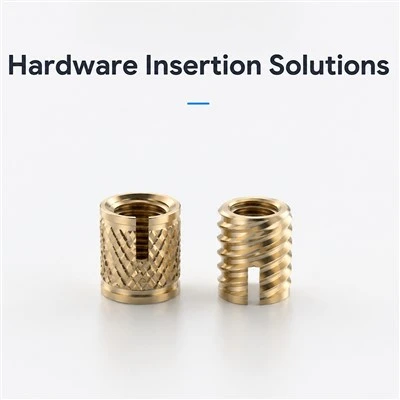
Brass parts are extensively utilized as conductive terminals, bases for signal connections, and precision fine-tuning assemblies in automation systems. The parts must have a smooth contact surface without burrs, precise size and consistent conductivity. According to the characteristics of brass, such as soft texture, easy deformation, and the generation of burr, we adopt refined low-speed turning and milling one-time forming technology without secondary polishing, flat and smooth contact surfaces are guaranteed, and poor contact and unstable signals caused by burr and edge collapse are avoided.
3. Automation Components Micro Precision Control Technology
The repeated positioning precision and the total operation accuracy of automation equipment are determined only by the accuracy of component machining. In response to the industry's widespread problem of qualified first pieces but out-of-tolerance batch products and later-stage precision attenuation, we have developed a unique full-process precision closed-loop control system for the automation industry. We have realized the steady tolerance output of ±0.005mm, to match the precision assembly of high-end automation equipment, focusing on three fundamental concerns, deformation control, dynamic accuracy and batch consistency.
a. Positioning Custom Tooling to Avoid Stacked Clamping Errors
For automation equipment special-shaped parts, thin-walled parts and multi-hole reference parts, generic tooling is not used, but integrated tailored vacuum tooling and positioning locking tooling are adopted. It can realize multi-station machining in one clamping, decrease the positioning deviation caused by numerous clamping . lock the reference accuracy at the hardware level and ensure the uniform reference of parts in the same batch.
b. Optimization of Pre-Processing of 3D Simulation to Prevent Structural Machining Risks
Firstly, CNC cutting simulation is performed for customer provided STEP/IGS 3D models to foresee the dangers of the machining process such as thin wall deformation, deep hole deflection, surface interference and stress concentration. The dimensional deviation caused by trial-and-error machining can be eliminated by pre-optimizing the tool path, cutting depth and feed rate, which can significantly improve the one-time pass rate of processing.
c. Stress Reduction and Aging Therapy for Future Precision Attenuation
Prior to completion a stress release technique is set aside for high frequency moving components of automation equipment. By means of layered cutting, intermittent cooling, natural aging and low temperature stress relief process, the internal cutting stress of parts is completely released, which solves the problems of precision drift and structural deformation caused by stress rebound in the long-term operation of equipment, and ensures the long-term operation stability of equipment.

4. High Precision Equipment Dynamic Error Compensation & Calibration
All processing equipment is regularly calibrated with precision, using laser interferometer backlash compensation and correction of spindle runout. Generally processing factories are generally static for precision calibration. We focus on lowering dynamic tracking errors in processing, solving trajectory deviation problems in high-speed cutting, and adapting to the dynamic accurate needs of precision automation parts.
5. Batch homogeneity is ensured by three-stage precision inspection.
A three-level quality control system encompassing first-piece full-size inspection, in-process patrol inspection, and finished product final inspection is implemented. Precision testing equipment such as coordinate measuring machines, 2D image measuring instruments, height gauges, and micrometers are used to fully inspect core assembly indicators of automation parts, including flatness, parallelism, perpendicularity, coaxiality, aperture tolerance, and surface roughness to eliminate defective products and ensure 100% interchangeable assembly of batch parts.
6. Exclusive integrated support and mass production solutions for automation market
Non-standard automation equipment is characterized by rapid R&D iteration, high degree of customization, dense small batch and multi-batch requirements, and strict requirements for delivery cycle, consistency and supporting performance in mass production. To meet the demand characteristics of the automation industry and adapt to the full-scenario needs such as R&D prototype, small-batch trial production and large-batch mass production, we have built a one-stop service covering the whole process, including drawing review, process customization, precision machining, post-processing, precision inspection and batch delivery.
We provide comprehensive, industry-standard post-processing of automation parts, including: Aluminum alloy hard anodizing (wear resistance, insulation), natural sandblasting (uniform machine appearance), stainless steel passivation (rust prevention), carbon steel quenching and tempering (improved structural strength), and deburring and polishing of precision parts. In all post-processing processes the tolerance restriction is applied to prevent the surface treatment from damaging the precisely matching dimensions, to ensure the accuracy and the appearance standard.
For the automation components a specific process parameter database is set up in mass production management. All process parameters, tooling fixtures and inspection standards are established for completed goods. Whether it is thousands of samples or tens of thousands of mass-produced products, zero color difference and zero dimensional deviation can be achieved in batches, solving industry pain points such as batch assembly jams, non-interchangeable parts, and poor overall machine consistency of automation equipment, and helping equipment manufacturers shorten assembly and commissioning cycles and reduce production costs.
We are specialists in the machining of precise components for industrial automation. The main customers are manufacturers and system integrators of non-standard automation equipment, assembly line equipment, intelligent sorting equipment, precise transfer modules, visual inspection equipment, lithium battery automation equipment, 3C automation assembly equipment. We develop and manufacture all the critical components such as automation module slides, precision tooling and fixtures, lead screw and bearing fixing seats, transmission connectors, base plates of precision equipment frames, fine-tuning precision components and protective structural components. We support drawing, sample processing, and the customization of non-standard special-shaped parts. We provide rapid small batch prototyping and stable large batch mass production. We can also offer exclusive process optimization solutions based on the equipment's working conditions, precision grades, and service environments.
Conclusion: The main value of CNC machining for industrial automation equipment is not just part formation, but rather precision stability under dynamic working conditions, structural reliability for long-term usage and interchangeability consistency for batch assembly. General machining is unable to realize quality upgrading of high-end automation equipment. The source states that only industry-specific cutting techniques, deformation control systems and mass production quality control standards can increase the operation accuracy and service life of automated equipment. We are a professional industrial automation CNC precision machining provider, providing manufacturing organizations with highly flexible, highly reliable and cost-effective core component processing solutions with industry-specific processes, micron-level precision management and full-process supporting services.
If you need custom CNC precision parts, non-standard tooling jigs and module structural parts for industrial automation equipment, please feel free to contact us for process appraisal, precision solution optimization and accurate quotation.