

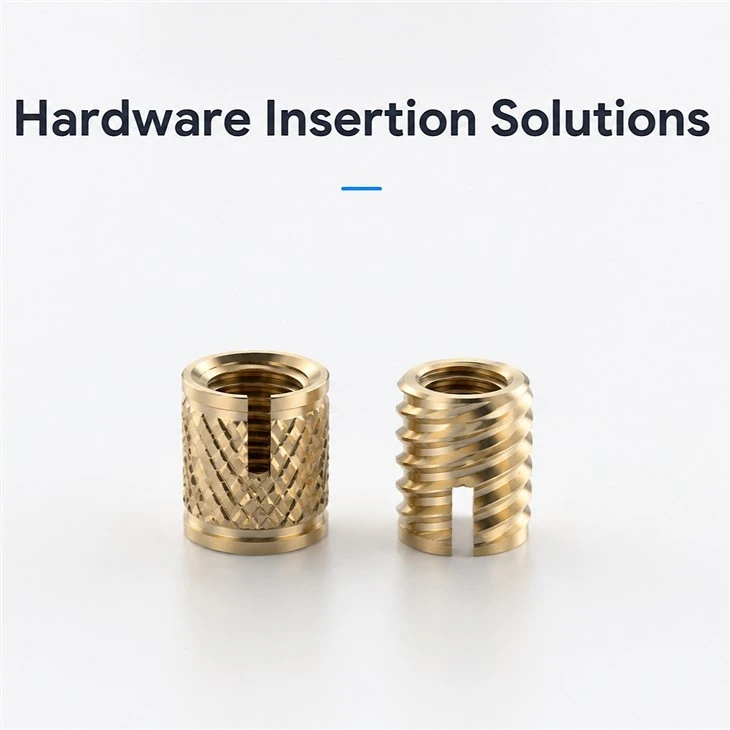
The Real Cost of Hardware Mistakes
When a self-clinching nut tears out of a 1.2 mm aluminium panel on the assembly line, the cost is never simply one part. It's the cancelled housing, the stopped manufacturing, the engineer pulled off their next project to diagnose a thread that should have held. Multiply it by a batch of 500 enclosures and a two-cent fastener becomes a five figure problem.
That's the gap Hardware Insertion Solutions are designed to address – not just by placing fasteners, but by making sure the appropriate fastener meets the right hole in the right material, every single time. At Key-CNC, we have learned for more than 16 years that insertion is not a step by itself. It is a system, yes. The implant will sit flush depending on the shape of the upstream bore. Whether or not threads make it to the finish line is dictated by the surface treatment sequence. The way of inspection is "does the loose stud reach your customer?" If you screw up any one of these, the whole assembly line pays.
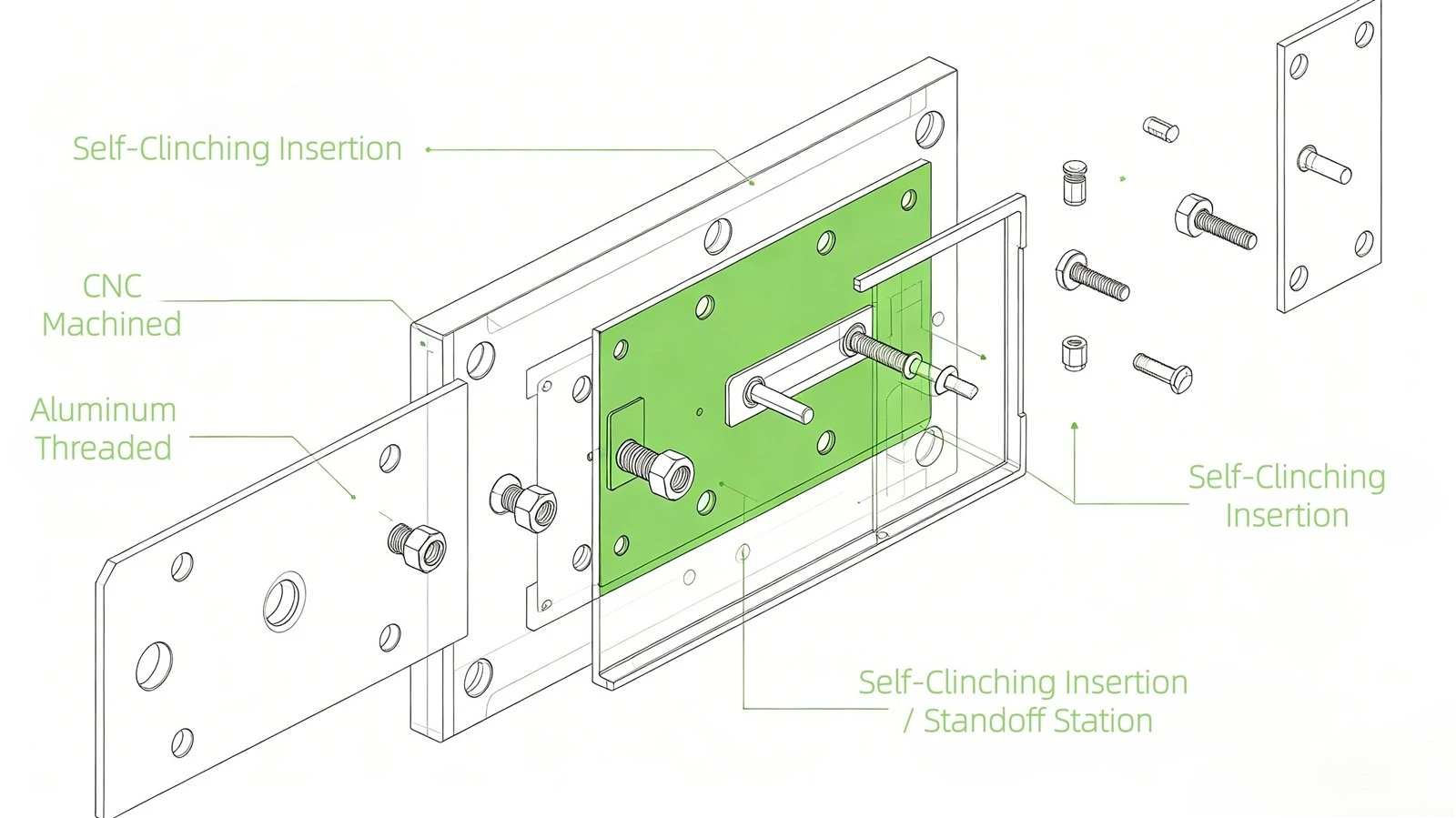
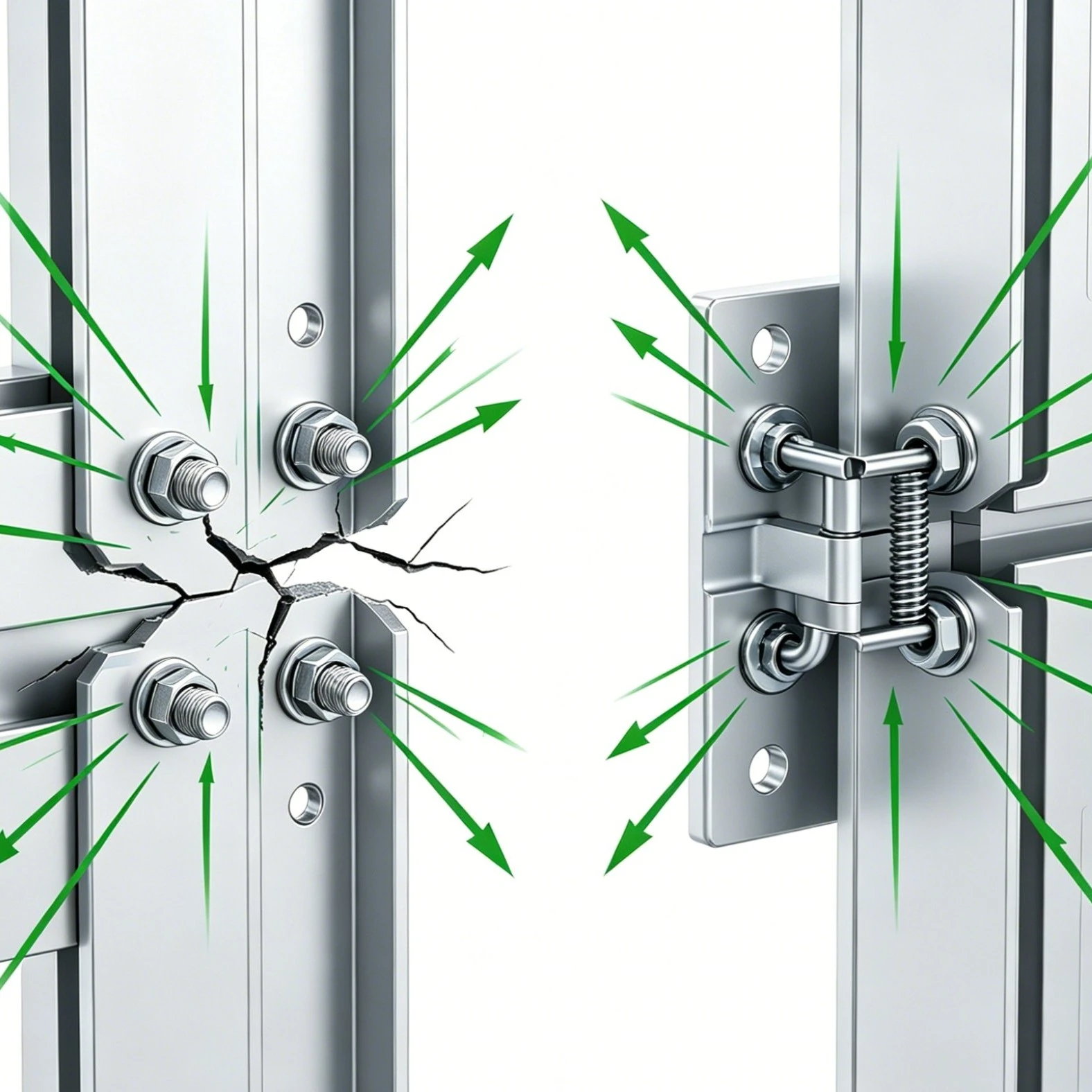
Four Failure Modes We See - and Prevent
Certain failure patterns repeat across industries after installing millions of aluminium, stainless steel, titanium, and engineering plastic fasteners. Our Hardware Insertion Solutions treat the cause, not the symptom.
→ Vibration pull-out. Our most typical call: "The insert held during installation but loosened after three months in service." Rarely is the fastener the cause. The hole diameter is enlarged by a few hundredths of a millimetre or punched instead of reamed, creating a work-hardened edge that hinders knurl engagement. We ensure hole diameter is within ±0.03 mm and verify with go/no-go gauges before hardware reaches the part. For important applications, we pull-out test first-article samples and offer data.
→ Stainless-on-stainless thread galling. Threaded stainless steel inserts in stainless housings seem sturdy. Under torque, the two surfaces can cold-weld, securing the bolt before clamping force. Our engineers identify this danger during DFM analysis and suggest anti-seize coatings, silver-plated inserts, or material pair tweaks to avoid seized bolts from scrapping assemblies.
→ Post-insertion surface finish contamination. Installing hardware before anodising causes the acid bath to corrode threads and leave white residue on the panel. A sequencing decision tree based on material pair, finish type, and geometry determines whether hardware goes in before or after surface treatment in our Hardware Insertion Solutions. Installing anodised aluminium is usually done subsequently. The order for powder-coated steel relies on whether the coating thickness closes the hole tolerance.
Select Insertion Method When
The wrong hardware insertion method is expensive. We assist consumers choose by matching the method to the problem,
not by explaining what we can accomplish.
Self-clinching press-fit
Fits ductile sheet metal 0.5 mm and thicker that needs a flush, permanent threaded boss that can survive numerous assembly cycles. Cold-forming displaces host material into an undercut, creating a junction with 3-5x the pull-out strength of a tapped hole of the same thickness. Too fragile are cast iron and carbon fibre.
01
Ultrasonic insertion
Heat-staking marks thermoplastic parts. The ultrasonic horn melts a thin plastic layer surrounding the knurl at 20 kHz, cleaning and stress-freeing it. Cosmetic surfaces affect consumer electronics, medical devices, and more.
02
Titanium, hardened steel, carbon fibre composites, and ceramics cannot be clinched or ultrasonically welded, hence adhesive bonding is utilised. Structure adhesives cover the insert-hole gap, spreading stress along the bond line. Records cure cycles ensure traceability.
03
Install heat-set
Suitable low-to-medium volume thermoplastic. A heated tool drives the insert into a tiny hole, softening the plastic, flowing into the knurl, and hardening it. Cheaper tooling, faster setup than ultrasonic, but temperature control is needed to preserve host material.
04

Material-Method Compatibility at a Glance
The table below summarizes which insertion methods work for which base materials - and, more importantly, which combinations to avoid. This is the same reference our engineering team uses during DFM review for every Hardware Insertion Solutions project.
|
Material |
Press-Fit |
Ultrasonic |
Adhesive |
Heat-Set |
|
Aluminum (5052/6061) |
✓ Recommended |
✗ |
○ Possible |
✗ |
|
Stainless (304/316) |
○ Hardness-limited |
✗ |
✓ Recommended |
✗ |
|
Carbon Steel |
✓ Recommended |
✗ |
○ Possible |
✗ |
|
Titanium |
✗ Not suitable |
✗ |
✓ Recommended |
✗ |
|
Brass / Copper |
✓ Recommended |
✗ |
○ Possible |
✗ |
|
ABS / PC / Nylon |
✗ Cracking risk |
✓ Recommended |
○ Possible |
✓ Recommended |
|
PEEK / PEI (Ultem) |
✗ Too brittle |
✓ Recommended |
○ Possible |
○ Temp-critical |
|
Carbon Fiber Composite |
✗ Delamination risk |
✗ |
✓ Recommended |
✗ |
|
Cast Aluminum |
○ Porosity risk |
✗ |
✓ Recommended |
✗ |
✓ = Recommended method. ○ = Possible with conditions; consult engineering. ✗ = Not suitable or not applicable. Actual method selection depends on part geometry, load requirements, and finish sequence - our DFM review provides a project-specific recommendation.
One Workflow Instead of Three Vendors
A typical multi-material assembly - say, an aluminum chassis with stainless brackets and a polycarbonate cover - traditionally needs three suppliers: one for the machined chassis, one for press-fit hardware, and one for ultrasonic inserts in the plastic cover. Each handoff adds a quality inspection, a shipping delay, and a point of miscommunication.
Our Hardware Insertion Solutions consolidate these streams. Parts are machined, deburred, surface-treated, and fitted with the correct hardware under one quality system. The chassis receives self-clinching standoffs. The stainless brackets get adhesive-bonded threaded inserts. The polycarbonate cover gets ultrasonic bosses. All three leave our facility in one shipment, with one inspection report, one invoice, and one point of contact. For customers managing complex BOMs, this consolidation cuts procurement overhead, eliminates tolerance-mismatch finger-pointing, and shortens the path from design freeze to first production run.
Materials and Capabilities
Our Hardware Insertion Solutions are compatible with a wide variety of materials and standards. Suitable foundation materials include aluminium alloys (5052, 6061, 7075), stainless steel (304, 316), carbon steel, titanium, brass, copper and engineered plastics. Hole preparation tolerances for laser cut features are ±0.03-0.05 mm and bending surfaces are ±0.2 mm. Fasteners are installed with calibrated pneumatic and hydraulic equipment to ensure a consistent seating depth and torque value for each production run. Treatments to the surface such as anodising, powder coating, electroplating and passivation can be carried out either before or after insertion, depending upon design requirements. Our entire operation is ISO 9001 quality management standards and we deliver RoHS compliant fasteners for ecologically regulated markets.
 |
 |
 |
 |
Lead Time and Ordering
Standard lead times for Hardware Insertion Solutions range from 7 days for orders up to 100 pieces to 15 days for 501–2,000 pieces. Orders exceeding 2,000 pieces are scheduled by negotiation to ensure adequate material provisioning and tooling allocation. There is no fixed minimum order quantity - we support everything from single prototypes to ongoing production programs. Quotes are returned within 24 hours of receiving your drawings and BOM, and sample parts are available upon request to validate fit and function before committing to a production run.
FAQ
Q: How do I know which insertion technique my part needs?
A: No need to make a decision beforehand. Email us your part geometry, material and assembly needs and our DFM evaluation will offer the optimal method - or combination of methods - based on material compatibility, load requirements and completion sequence. We'll go over the logic so you can make an informed decision.
Q: Do you have assembly combining metals and plastics?
A: Yes. One of the best use cases for our Hardware Insertion Solutions is mixed material assemblies, since various materials frequently need different insertion procedures. One workflow can manage an aluminium chassis with polycarbonate covers-using self-clinching hardware for the metal and ultrasonic or heat-set inserts for the plastic-and one set of quality documents.
Q: What occurs if an inspection of a fastener is unsuccessful?
A: In-process monitoring catches most problems before a whole batch is created. If a defect is found during final inspection, the affected parts are isolated, the underlying cause is determined (hole size, material batch, tooling wear), the correction action is recorded and new parts are manufactured using the revised method. You only get conforming parts.
Q: How do you sequence surface treatments with hardware insertion?
A: The sequencing is dependent on the material pair and finish type. Hardware is normally added to anodized aluminium after anodising to avoid acid attack on the insert. For powder coated steel we consider if coating thickness will close hole tolerances, and may propose post coating insertion. This decision is part of every DFM review and is built into the process plan that you approve before production starts.
Hot Tags: hardware insertion solutions, China hardware insertion solutions manufacturers, suppliers, factory


