What Is a Self-Clinching Standoff
- A Precision Self-Clinching Standoff is a threaded fastener that is permanently inserted into ductile sheet metal or panels by a press fit process. Unlike weld studs or riveted bushings, it does not require heat, glue or access to the back of the panel. The standoff body has a precision-machined clinch profile, often a serrated or knurled under-head ring, that displaces the host panel material when installed. Squeezing force is applied and the panel material cold-flows into this profile providing a mechanical interlock resisting rotation and pull-out under service pressures.
- The outcome is a resilient threaded anchor point that can be used with screws or matching fasteners from any side depending on whether the standoff is designed with through threads, blind threads or an external male thread. Thanks to the system's adaptability, it is an essential element for the assembly of enclosures, mounting on PCBs, busbar support and modular equipment.

Thread Configurations Available
A feature of a bespoke standoff from Key-CNC is the possibility to specify internal and external thread combinations in one piece. We machine:

Internal Standoff Through Thread
The standoff body is threaded inside all over. This permits a screw to be inserted from either side, making it perfect for when the mounting panel is sandwiched between two items. Through-thread designs are used to attach PCB to chassis, where the same threaded post serves both board holding and enclosure sealing.

Internal Blind-Thread Standoff
The internal thread is broken before the clinch end that closes the bottom. This prevents the screws from falling into the mounting panel and safeguards delicate components on the back. Blind-thread designs are typically employed in sealed enclosures, medical device housings, and in any situation where the fastener must separate one side of the assembly from the other.

Male Standoff (Threaded End)
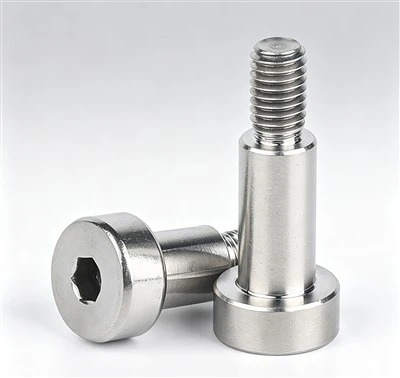
A male standoff is one which has an outside threaded protrusion extending from the clinch head rather than an interior threaded bore. This permanent stud accommodates a nut or a threaded cap on the projecting end. Male versions are common for busbar mounting . To attach to a terminal block and grounding points when a projecting threaded post is desirable .

Internal / External Mix
Key-CNC standoffs are machined from a single piece of material and have internal and external threads to provide mounting and component attaching threads at opposite ends of assemblies. This cuts down the amount of assembly parts and adapters needed.
Material Selection for Standoffs
The material choice for a Precision Self-Clinching Standoff must balance the hardness requirement for clinching (the standoff must be harder than the host panel) against the application environment. Key-CNC stocks and machines the following materials:
Carbon Steel (12L14, C1045): Heat-treated to HRC 28–38 for reliable clinching into aluminum and mild steel panels. Available with zinc plating, black oxide, or zinc-nickel finish for corrosion protection. Suitable for general industrial enclosures, electrical cabinets, and machinery frames.
Stainless Steel (303, 304, 316): The preferred material for Precision Self-Clinching Standoff applications in food processing, marine, chemical, and medical environments. Type 316 offers superior chloride resistance. Passivation is standard; electropolishing is available for ultra-clean surface requirements. Stainless standoffs clinch reliably into aluminum panels up to HRB 70.
Aluminum (6061-T6, 7075-T6): Lightweight standoffs for weight-sensitive assemblies such as UAV frames, portable instrumentation, and sporting equipment. 7075-T6 provides tensile strength approaching mild steel. Type II or Type III anodizing adds surface hardness and corrosion protection. Aluminum-to-aluminum clinching eliminates galvanic corrosion risk.
Brass (C36000): Selected for electrical conductivity, non-magnetic properties, and aesthetic appearance. Brass standoffs are common in RF enclosures, instrumentation panels, and decorative architectural hardware. Natural finish or nickel plating available.
Technical Specifications
Key-CNC manufactures Precision Self-Clinching Standoff components to the following dimensional and performance envelope:
| Standoff Length | 3 mm – 50 mm; longer lengths available on request |
| Internal Thread | M2 – M6 metric coarse and fine; UNC #2-56 – 1/4-20 imperial |
| External Thread | M3 – M8 metric; custom thread pitches supported |
| Panel Thickness Range | 0.8 mm – 3.2 mm for standard clinch profiles; thin-sheet variants down to 0.5 mm |
| Clinch Profile | Serrated knurl ring (standard); hexagonal broach (anti-rotation for soft panels) |
| Dimensional Tolerance | Body diameter: ±0.05 mm; length: ±0.1 mm; thread class: 6H / 2B minimum |
| Surface Finishes | Zinc plating (clear/blue/yellow), black oxide, electroless nickel, passivation, Type II / Type III anodizing |
| Push-out Resistance | Meets or exceeds PEM® equivalent values; verified per batch |
| Torque-out Resistance | Meets or exceeds PEM® equivalent values; verified per batch |
| Quality System | ISO 9001:2015; material certificates and inspection reports included |
| Lead Time | Samples: 5–7 days; Production: 12–18 days |
Installation and Panel Preparation
The performance of a self-clinching standoff depends as much on correct installation as on manufacturing quality.
Key-CNC provides engineering guidance for the following installation parameters:
-- Hole diameter must match the standoff clinch ring specification, typically with a tolerance of +0.08 / -0 mm. An oversized hole reduces clinch engagement and lowers push-out resistance. An undersized hole may cause panel deformation or incomplete seating.
--The mounting panel must be flat and free of burrs around the installation hole. Deburring should not chamfer the hole edge, as the sharp corner aids initial material displacement during clinching.
--Installation force is applied through a flat-faced punch or anvil that contacts the standoff head squarely. The recommended squeezing force varies by standoff size and material - our engineering team provides force specifications with every custom order.
--The standoff head must seat flush against the panel surface after installation. A gap indicates incomplete clinching, which compromises both push-out strength and thread alignment.

FAQ
Q: Self-clinching standoffs fit which panel materials?
A: Self-clinching standoffs require ductile host panels like aluminium (5052, 6061, 7075), cold-rolled steel, or copper alloys. Standoffs must be tougher than panels. Stainless steel standoffs secure HRB 70 aluminium panels. Stronger clinch rings are offered for stainless steel sheet standoffs.
Q: Can one standoff have internal and exterior threads?
A: Key-CNC creates single-bar combination standoff parts with internal and external male threads. Non-special request capability.
Q: What distinguishes through-thread and blind-thread standoffs?
A: Due to its continuous internal thread, through-thread standoffs offer screw access from all sides. Closed bottoms on blind-thread standoff clinch ends prevent screw protrusion and seal the mounting hole from impurities. Select for reverse-side isolation.
Q: Can you recommend installation force?
A: Every unique order from Key-CNC includes the hole diameter, installation force range, and anvil/punch requirements for your standoff size, material, and panel combination. In-house push-out and torque-out testing confirms these results.
Q: Does your standoff fit PEM® mounting holes?
A: Precision Self-Clinching Standoffs can match PEM® standard hole dimensions or your custom specifications. For assemblies having PEM®-sized holes, we can make drop-in replacement standoffs with equivalent or better performance at competitive lead times.
Hot Tags: precision self-clinching standoff, China precision self-clinching standoff manufacturers, suppliers, factory