Ridges Are Job Descriptions
A cylindrical, threaded knurl nut has raised ridges on its outer surface. Two flat wrench faces and a torque wrench secure a hex nut. The gripping surface of a knurl nut is the pattern, which is meant to be gripped by something other than a wrench-usually plastic, metal, or your fingertips. That single feature distinguishes knurled nuts from most fastener drawer items, so pattern choice is crucial.
The first cold fact: conventional knurling does not carve the design into metal. Displaces it. A hardened knurl wheel presses against the workpiece as it spins, forcing the material upward into ridges rather than cutting it away. Machinists call this "rolled", not "cut". Although some current CNC systems form the texture with cutting tools, cold-forming gives it the classic raised look. The misplaced metal isn't adornment either. The ridges can be read like a label to determine where the nut is: compressed into a plastic housing, forced into a metal plate, or hand-twisted on a camera rig.
Meet the Three Main Patterns
Walk through any fastener catalog and you will keep meeting the same three characters.
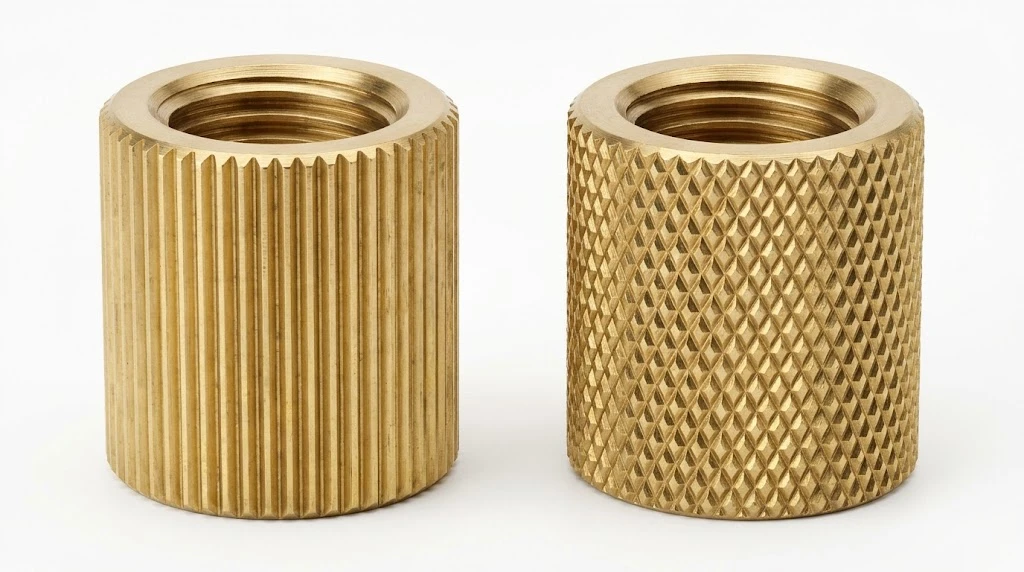
The straight knurl runs parallel ridges along the length of the part, like corduroy. Each ridge makes line contact with the host material along its full length, so a straight pattern is excellent at stopping rotation in a press fit - and largely uninterested in resisting a straight pull.
The diagonal knurl is the same idea with the ridges spiraling around the part like a barber pole. Tilt the ridges and the grip starts fighting rotation in both directions, which is why diagonal textures show up so often inside consumer electronics housings.
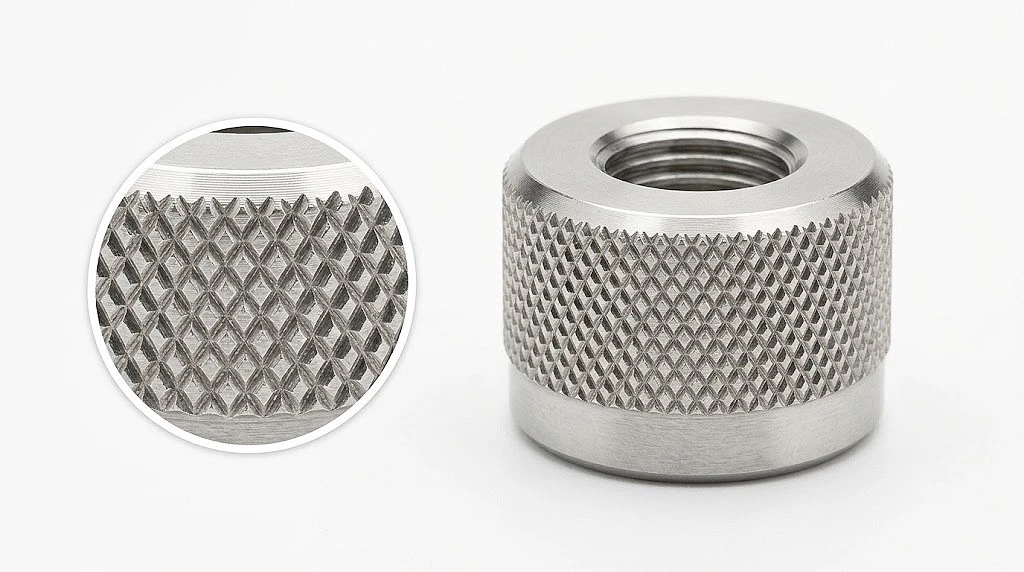
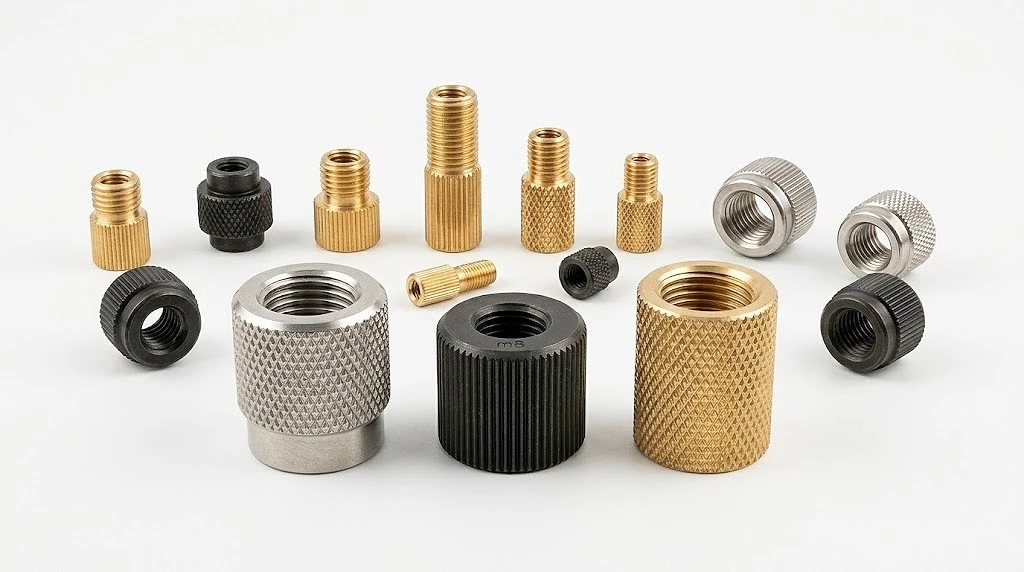
The diamond knurl is two sets of diagonals crossing each other, producing the familiar crosshatch - think sneaker sole. The crossings create thousands of tiny points that bite in every direction at once, resisting rotation and pull-out simultaneously. High-vibration assemblies are diamond country.Quick cheat sheet before we go deeper:
|
Pattern |
Looks like |
Best at |
Where you'll meet it |
|
Straight |
Corduroy ridges, end to end |
Locking rotation in a press fit |
Inserts seated against a flange or shoulder |
|
Diagonal |
Spiral "barber pole" lines |
Anti-rotation in both directions |
Consumer electronics and appliance housings |
|
Diamond |
Crosshatch grid |
Rotation and pull-out at once |
Robotics joints, sports gear, outdoor equipment |
Straight vs. Diamond: Two-WAY Tug-of-War
Remember that knurl patterns compromise between rotation and pull-out, and no pattern wins both.
Each crossing teeth of a diamond knurl burrows into the host material, making it the preferred choice for parts that are repeatedly shaken, vibrated, and torqued. Straight knurls rotate only. Its lengthwise ridges anchor torque well but offer little against an axial tug, which is fine when a flange or shoulder pulls out the assembly.
Contrary to popular belief, "stronger" does not necessarily mean diamond. Using a diamond pattern instead of a flanged straight-knurl design puts point-contact stress on a host plastic that may not tolerate it. Inserts will escape their holes if you state that pull-out is the enemy. Engineering successes like getting the pattern correct the first time are unseen since nothing loosens.
The Numbers Hiding in the Texture
Knurl textures look casual; their dimensions are not. Pattern pitch - the spacing between ridges - typically runs from about 0.3 mm to 1.5 mm, with fine and coarse variants named under standards such as DIN 82. On a precision-machined part, knurl depth sits in the 0.15-0.35 mm range, and well-controlled CNC machining keeps the outer diameter, pitch, and depth within roughly plus or minus 0.02 mm. That is a texture finer than a fingerprint, dimensioned more tightly than most of the parts around it.
One more small myth to retire: a coarse knurl does not automatically mean "more grip". In hard, glass-filled plastics, a fine pitch delivers more engagement points per millimeter and often holds better than a chunky coarse pattern, which needs softer material to deform around its bigger teeth. Grip, like so much else in fasteners, is a matching problem rather than a brute-force problem.
You Have Already Met These Patterns
Once you know the vocabulary, the textures start appearing everywhere.
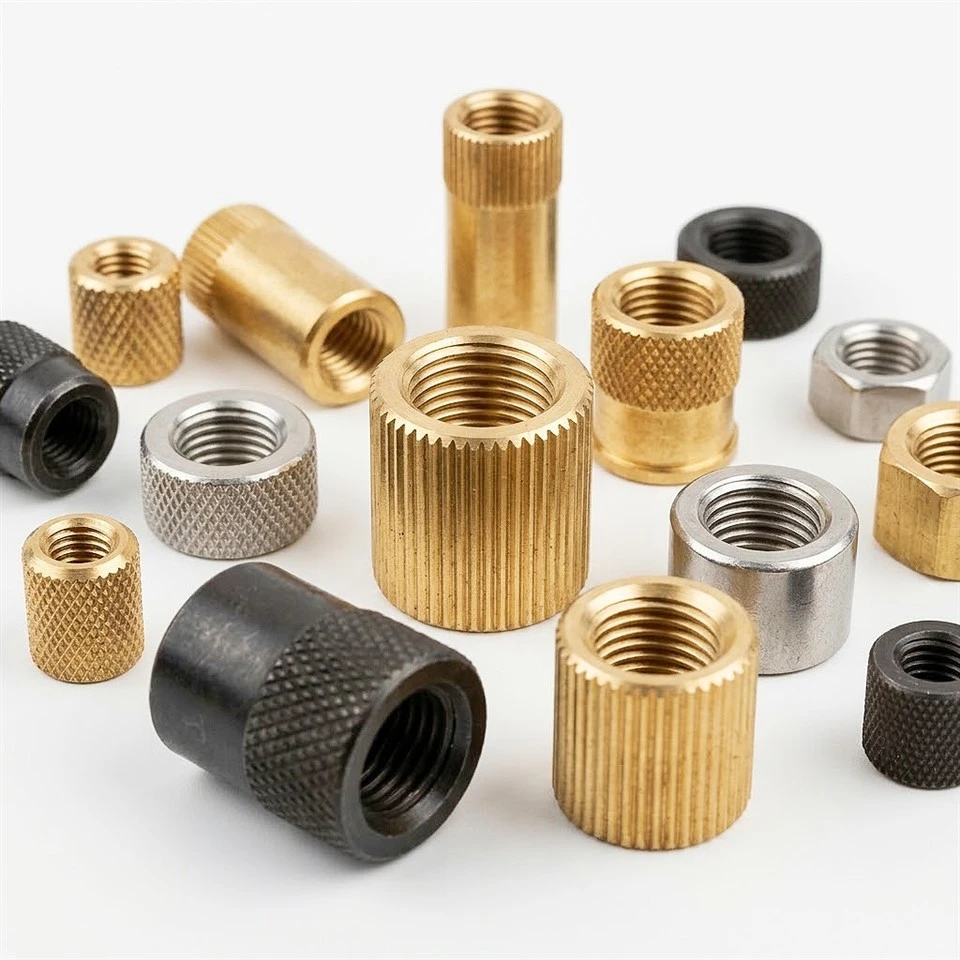
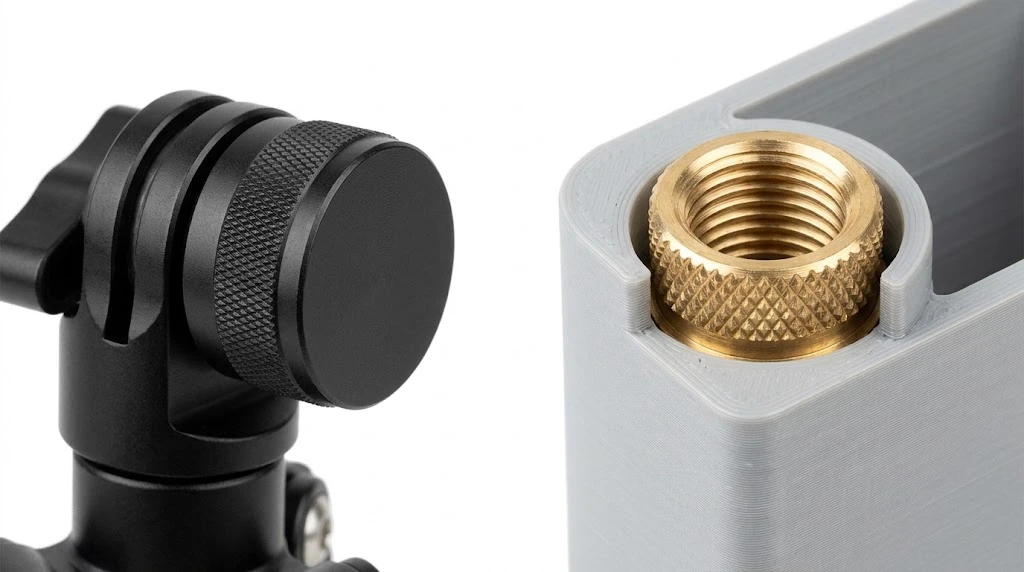
Pick up a camera rig, light stand, or microphone boom and find the little black cylinder you twist with your fingertips: that is a knurled drum nut, typically steel with a black oxide finish, where the knurl band exists purely for your fingers - a hex nut would demand a wrench, and a wing nut's protruding tabs add bulk that a round profile does not. Open a 3D printer, an appliance housing, or a drone, and the threaded metal inserts set into the plastic are usually brass knurled nuts, held in by a texture smaller than a grain of rice. Robotics joints, fitness machines, bike accessories, and medical enclosures all lean on the same quiet trick: metal threads where plastic cannot cut them, locked in place by geometry instead of adhesive.
Tiny Ridges, Big Work
So the next time a small nut refuses to spin uselessly in your hand - or refuses to come loose inside a machine that shakes all day - take a second look at the ridges. On a well-made knurl nut, nothing about that pattern is accidental: the style tells you how it is installed, the pitch tells you what it grips, and the depth tells you how long it plans to stay there. The humble knurl may be one of the least glamorous textures in manufacturing, but it quietly holds together cameras, cars, robots, and half the gadgets on your desk.
Hot Tags: knurl nut patterns 101: what those tiny ridges actually do, China knurl nut patterns 101: what those tiny ridges actually do manufacturers, suppliers, factory