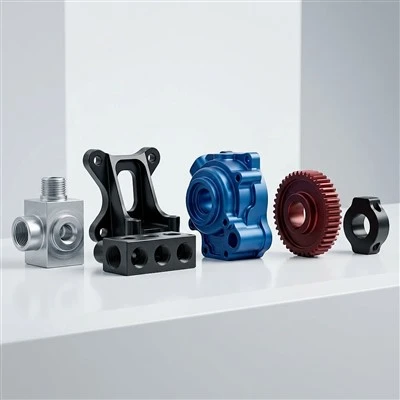
Yes, deburring technique service can be applied to coated goods. This is a question that is often answered in the industry and I am here to throw some light on this topic as a Metal Parts Deburring Process Service Provider.
Deburring And Coatings: What You Need To Know
» Deburring
Before we look at whether deburring may be used on coated parts, let's have a look at what deburring is and the types of coatings that are generally applied to metal parts.
Deburring is the process of removing burrs, undesirable pieces of material that protrude from the edges or surfaces of metal items. These burrs can be produced in a number of industrial procedures such as machining, stamping or casting. There are several reasons why deburring is needed. It increases the safety of the components by getting rid of sharp edges that could hurt someone. This also optimises the function of the pieces as burrs may interfere with the proper fit and functioning of components . Deburring improves the appearance of the pieces as well.
But, there are a number of reasons why metal things are coated. Some coatings are for corrosion resistance so the metal does not rust/corrode over time. Others are for wear resistance to lessen the friction and wear of parts in operation. They could be coated for aesthetic reasons, to impart a certain colour or sheen.
Deburring problems for coated parts
There are a number of issues related with deburring coated items. The first is the risk of damaging the coating. Deburring is the removal of material on the surface of the object. If done wrong this can damage the coating. It might lead to loss of protective or aesthetic properties of the coating.
Another issue is the compatibility of the deburring procedure with the coating. Some coatings have varied properties and some may be more resistant to the deburring procedure than others. For example, a soft coating may be easier to deburr without damage than a thick, hard coating.
Best Deburring Services For Coated Parts
There are problems, however some deburring processes can be utilised on coated products with relatively little harm to the coating.
Micro-Deburring & Internal Surface Finishing - Metal Micro-Deburring & Internal Surface Finishing For Metal is a precise deburring technique, especially suited to coated parts. The process makes use of sophisticated equipment and techniques in an effort to remove small burrs on the surface of the part with minimal damage to the coating. The micro-deburring method allows the elimination of a large amount of burrs without damaging the coating.
High Speed Steel Deburring Bit
Otherwise, coated objects can be deburred using a high speed steel tool. Sharpness and durability are the known properties of HSS tools. These tools, when used properly, will deburr the edge of the part with very little effort and with very little chance of damaging the coating. To maintain the coating, you need the right tool and the right process.
Micro Deburring Services
Micro Deburring Service is a total coated component deburring solution. Usually this service combines specific tools and processes and expert operators who know how to work with coated items. The micro-deburring service can be tailored to the specific needs of the part, removing burrs while preserving the coating.
Precision Edge Finishing Services
Coated items are also the best for Precise Edge Finishing Services. The services are aimed at achieving a smooth and accurate edge finish that is critical to the function and appearance of the product. Suitable edge finishing processes can be used to remove the burrs without destroying the coating.
What You Should Know Before Deburring Coated Parts
There are a few things to consider before you try to deburr a covered part.
Coating Types The properties of the coatings are different and you need to know the properties of the coating before deburring. For example, the procedure you would use for deburring powder coating would be different than the process utilised for liquid coating.
Coating thickness: Coating thickness can also have an influence on deburring. Heavier coatings may be more damage resistant but more difficult to deburr.
Burrs Place Burrs The position of the burrs on the lot is another crucial aspect. Burrs near the margins of the coating are more difficult to remove without damage than burrs in the middle of the section.
intended finish: Also consider the intended finish of the part. If a finish is to be preserved in a certain texture or look, the deburring procedure must be chosen carefully so as not to ruin the finish.
Cases examples:
Let's have a look at some example scenarios to help you appreciate how effective deburring on coated parts can be.


References
- "Metal Finishing Handbook", ASM International
- "Coatings for Corrosion Protection", Wiley - VCH