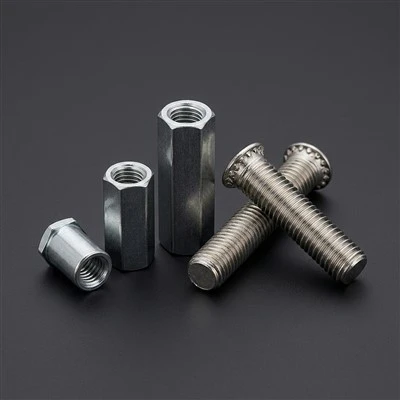
Self-drilling wing screws?
Wing-tec or TEK screws have a drill tip, pilot thread and wings. The wing punches a neat, fairly big hole in the outside material (gypsum board, wood panelling or sheet steel cladding) before the screw engages the structural substrate.
Unlike self-drilling screws, wing-type screws can cross multi-layer assemblies in one pass. They install steel frames with light gauge steel studs covered with insulation board, weather barriers or cladding. Production-rate applications need faster installation and cleaner, more uniform fastener holes.
Wing Design Affects Fastening Equation
On contact, standard self-drilling screws engage the substrate. In multi-material assemblies like drywall over steel stud, cement board over wood, and composite panel over steel frame, the screw's drill tip might shatter or chip the outer layer before reaching the substrate, especially at thinner gauges.
The wing on self-drilling screws guides and enlarges the outside material. Installation proceeds as follows:
1. The wing rotates into the outer material, forming a pilot opening.
2. The wing enlarges the hole to meet the screw shank as it advances.
3. The wing shears off cleanly at the fracture groove when the screw hits the structural substrate (steel or wood).
4. The remaining screw shank fully mechanically engages the substrate, creating a vibration-resistant connection.

Material and Coating Selection
The performance envelope of self-drilling screws with wings is set largely by material and surface treatment.
KEY-CNC supplies wing-type self-drilling screws in the following configurations:
|
Material |
Characteristics |
Best For |
|
Carbon Steel + Zinc |
Economical; good hardness; zinc provides basic corrosion resistance in dry environments |
Interior steel framing; HVAC ductwork |
|
Stainless Steel 410 |
Hard, magnetic; good corrosion resistance with passivation; moderate cost |
Exterior cladding; humid environments |
|
Stainless Steel 305/304 |
Non-magnetic; excellent corrosion resistance; non-hardenable by heat treatment |
Coastal builds; chemical plants; facade systems |
Specification Selection Guide
Selecting the correct self-drilling screw with wings requires matching three variables: substrate gauge, total assembly thickness, and environmental exposure class. Get any one wrong and you'll face either wing-shear failure (wing breaks before substrate engagement), pull-through (outer material tears), or premature corrosion.
Drill Point Type (TEK Size)
Self-drilling screws are classified by drill point capacity, corresponding to TEK screw sizes:
TEK 1 (Ø4.2 mm): Drills up to 2.5 mm steel - for thin cladding and light-gauge drywall-to-steel
TEK 3 (Ø6.3 mm): Drills up to 4.0 mm steel - for structural steel framing and heavy gauge connections
TEK 5 (Ø8.0 mm): Drills up to 6.0 mm steel - for thick structural plate connections
Wing Diameter and Shear Rating
Wing diameter must exceed the total thickness of the outer non-structural layers. The shear groove - the intentional notch where the wing fractures - is rated for a specific torque threshold. KEY-CNC's engineering team can specify custom wing heights and shear ratings for non-standard assembly stacks, ensuring the wing breaks cleanly without deforming the surrounding material.
Thread Pitch
Coarse-thread wing screws (fine-pitch variant also available) provide faster engagement in steel. For steel-to-steel framing, a 16–18 TPI thread pitch is standard. For wood-over-steel assemblies, a hybrid coarse thread with a fine upper shank prevents splitting.
FAQ
Q: Common questions
A: What is the difference between wing and regular TEK screws?
TEK screws go into normal substrates. Wing TEK screws have a reamer wing above the drill point that bores through outer non-structural layers before drilling into the substrate. Thus breaking of the multilayer assemblage is avoided.
Q: Can aluminium substrates be used with wing screws?
A: Yes, aluminium screws work on stainless steel 410 or 305 wing screws. For optimal results match the TEK size to the aluminium gauge and ensure the wing height clears any non-structural layers above the aluminium.
Q: What happens if the wing doesn't shear?
A: The wing not shearing is frequently indicative of the wing reaching the substrate before the screw was fully seated, i.e. the wing height was underspecified for the assembly thickness. To avoid this, KEY-CNC's engineering staff reviews assembly specs during DFM.
Q: What is the KEY-CNC wing diameter tolerance?
A: The normal tolerance for wing diameter is ±0.10 mm. KEY-CNC CNC-turned blank profiles offer ±0.03 mm precision control over wing diameter for facade and curtain wall applications.
Hot Tags: self-drilling screws with wings, China self-drilling screws with wings manufacturers, suppliers, factory