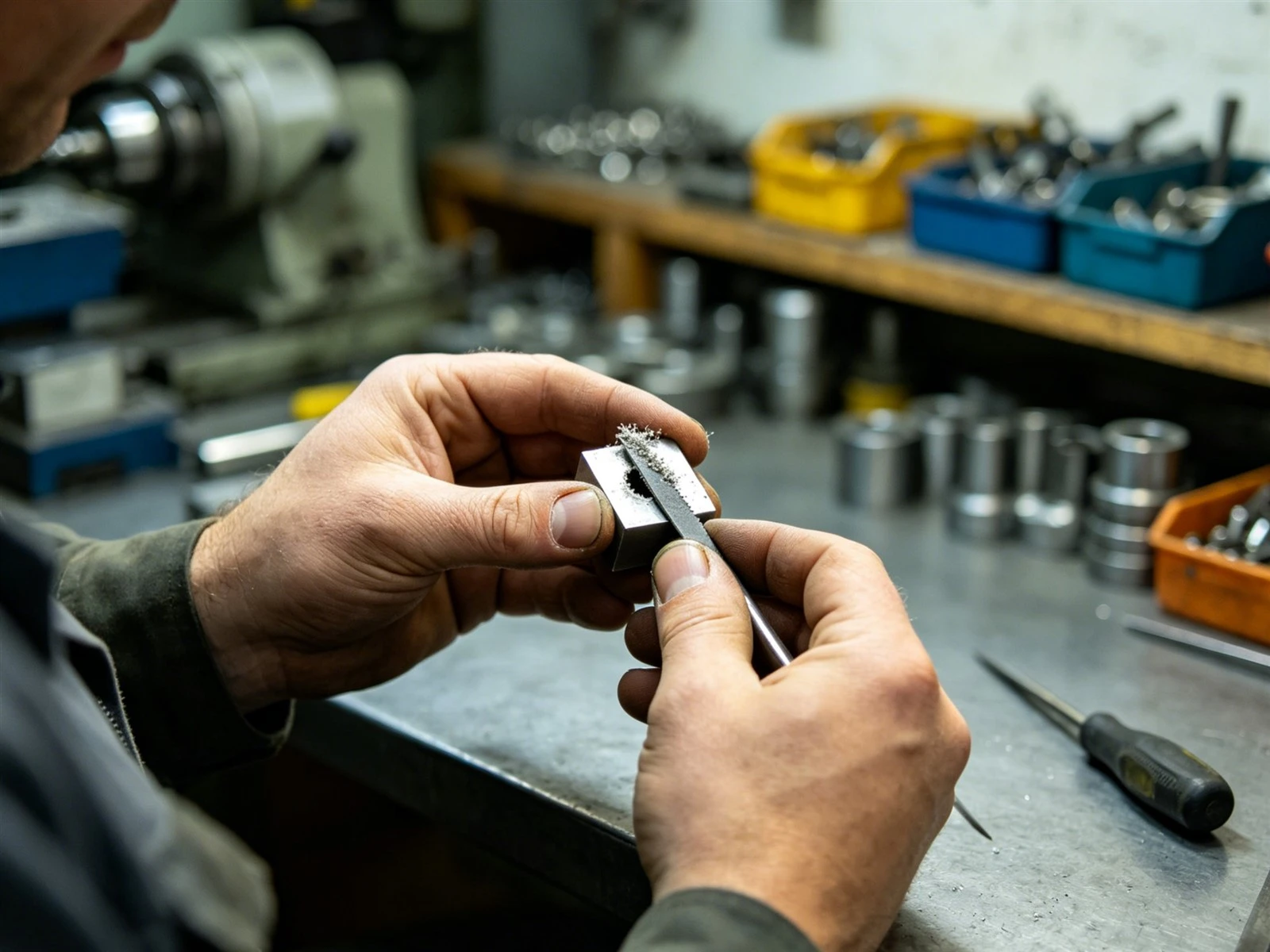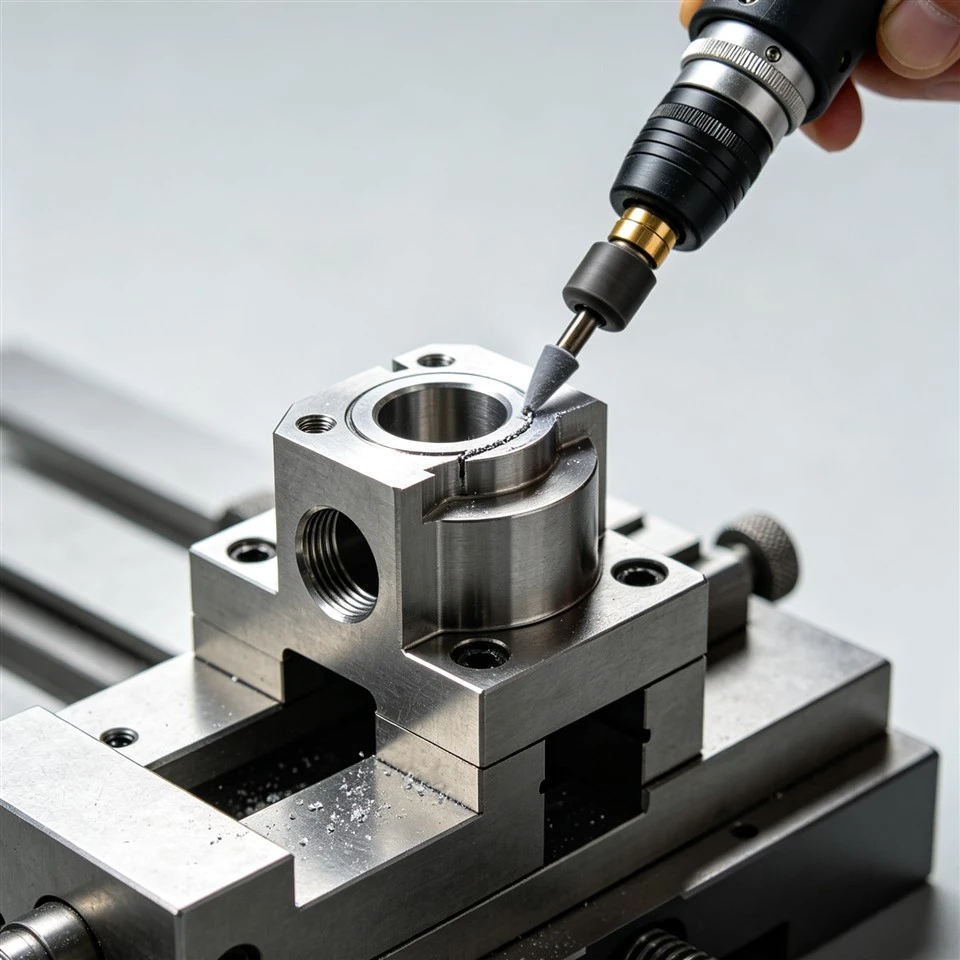
Grinding deburring is a controlled mechanical finishing process that uses abrasive tools to remove machining burrs and refine edge conditions after CNC operations.
Unlike simple manual trimming, it focuses on precise material removal based on part geometry, material characteristics, burr location, and drawing requirements. During milling, turning, or drilling, burrs may appear on edges, holes, and machined transitions, potentially affecting assembly accuracy or subsequent surface treatments.
A properly controlled grinding deburring process helps maintain dimensional stability while achieving the required edge quality for precision components.
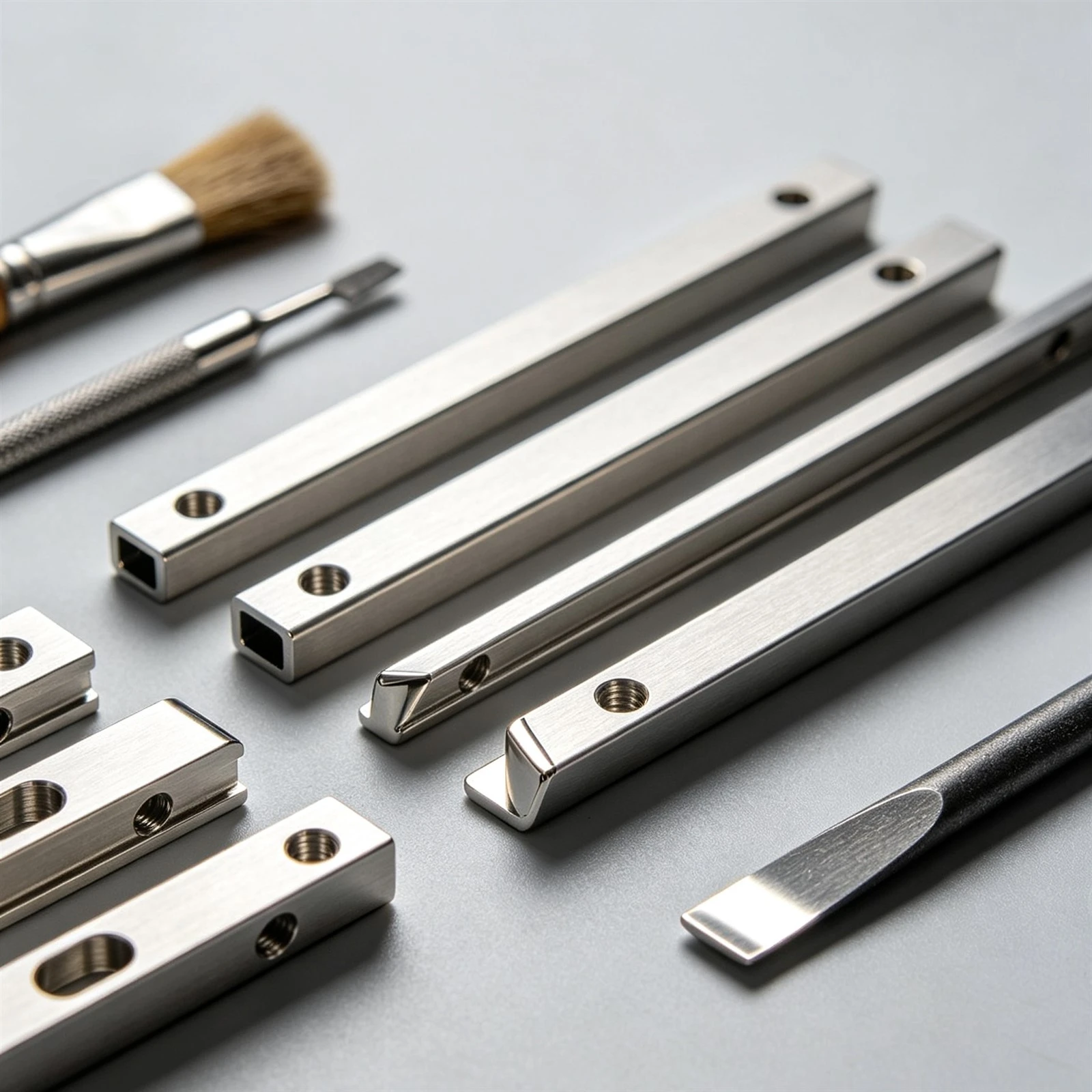
Grinding Deburring Process at Key-CNC
The grinding deburring process is adjusted based on part geometry, material properties, and finishing requirements to achieve consistent edge quality without affecting critical dimensions.

Part Evaluation and Surface Analysis
Before deburring, Key-CNC evaluates burr locations, critical features, and functional surfaces according to the part drawing and machining condition. This helps determine the appropriate grinding method and avoid unnecessary material removal.
Controlled Grinding and Edge Refinement
Suitable abrasive tools and grinding methods are selected based on the material and component structure. The process removes unwanted burrs from edges, holes, and machined areas while maintaining dimensional accuracy and surface integrity.
Materials Suitable for Grinding Deburring
Key-CNC applies grinding deburring methods according to different material characteristics.
| Material | Processing Consideration |
|---|---|
| Aluminum | Requires controlled grinding to prevent excessive edge removal |
| Stainless Steel | Abrasive selection is important due to higher hardness |
| Carbon Steel | Suitable for stronger grinding processes |
| Titanium | Requires careful process control to avoid surface damage |
| Brass & Copper | Needs appropriate abrasive selection for softer materials |
| Engineering Plastics | Requires lower-force finishing methods |
Material condition, machining method, and final application are considered before selecting the appropriate deburring approach.
Grinding Deburring Compared with Other Deburring Methods
Different deburring technologies are suitable for different part structures and production requirements.
| Deburring Method | Characteristics | Suitable Applications |
|---|---|---|
| Manual Deburring | Flexible and suitable for small quantities | Prototype parts and simple geometries |
| Grinding Deburring | Controlled edge refinement with abrasive tools | Precision CNC machined components |
| Vibratory Tumbling | Processes multiple small parts together | High-volume small components |
| Chemical Deburring | Removes material through chemical reaction | Complex internal structures |
Grinding deburring is commonly used when the part requires a balance between efficient burr removal and maintaining machining accuracy.
Custom Grinding Deburring Service Process
Submit Part Drawings
Customers can provide:
- 2D drawings
- 3D CAD files
- Material requirements
- Quantity information
Process Review
Engineering evaluation includes:
Burr locations
Grinding requirements
Tolerance considerations
Suitable finishing method
Production and Inspection
After process confirmation, parts are manufactured and inspected according to project requirements.
Delivery Preparation
Typical production lead time is around 10–15 working days, depending on part complexity, quantity, and finishing requirements.
Frequently Asked Questions
What information is required for a grinding deburring quotation?
+
-
To evaluate the project accurately, customers can provide part drawings, material details, quantity requirements, and any specific edge or surface finishing requirements. This helps determine the suitable process and estimated cost.
Can Key-CNC handle both prototype and production orders?
+
-
Yes. The grinding deburring service can be applied to prototypes, small batches, and production-volume components. Processing methods are adjusted according to order quantity and consistency requirements.
Can grinding deburring be combined with CNC machining and other finishing services?
+
-
Yes. Key-CNC can integrate grinding deburring with CNC machining and additional finishing processes, including anodizing, coating, plating, and surface treatment, providing a complete manufacturing solution from machining to final finishing.
How long is the lead time for custom grinding deburring projects?
+
-
The lead time depends on part complexity, quantity, material, and finishing requirements. For standard projects, production typically takes around 10–15 working days after drawing confirmation and process approval.
How does Key-CNC ensure consistent deburring quality for repeat orders?
+
-
For recurring projects, Key-CNC follows defined processing requirements based on approved samples, drawings, and inspection standards. This helps maintain consistent edge conditions and finishing results across production batches.
Hot Tags: precision grinding deburring for cnc machined parts, China precision grinding deburring for cnc machined parts manufacturers, suppliers, factory, deburring, Deburring Finishes Service for Custom Machined Parts, Deburring Tool with High Speed Steel, Manual Automated Deburring for Metal Parts, Metal Parts Deburring Process Service