

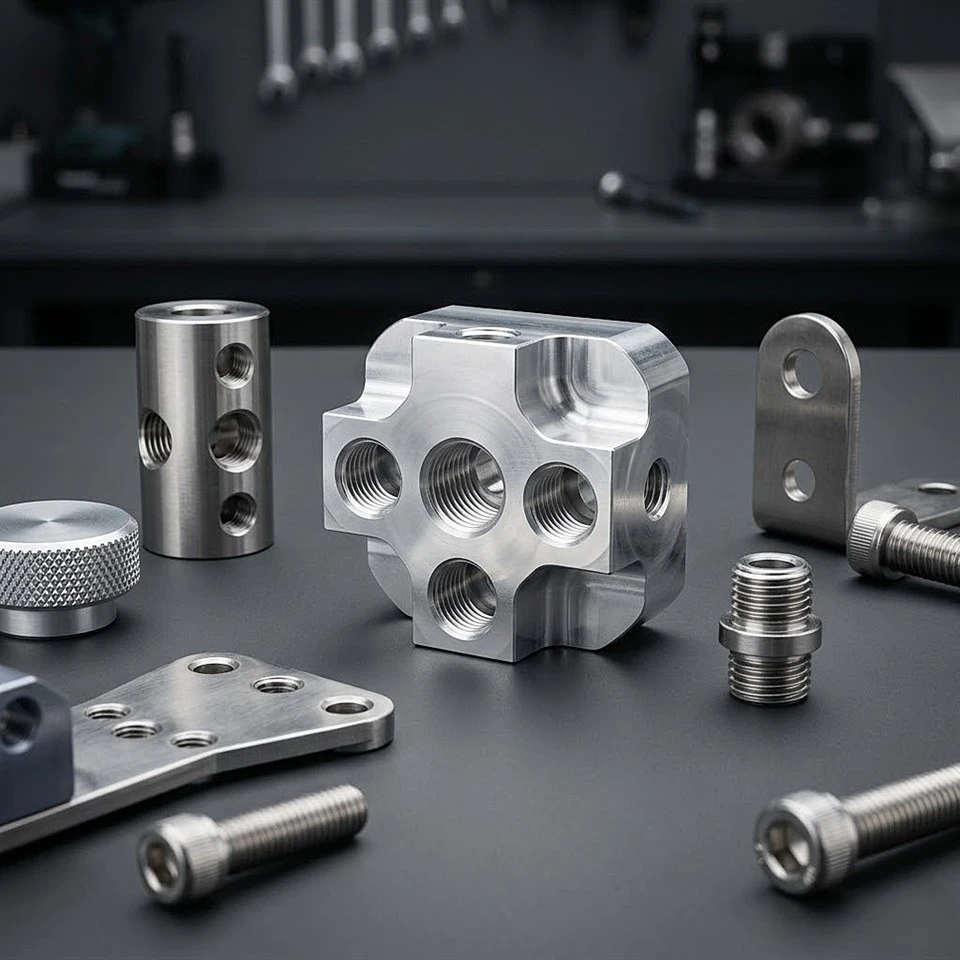
Types of Tapped Components We Manufacture
Different threaded parts are required for different designs. We tap and manufacture a wide variety of component types:
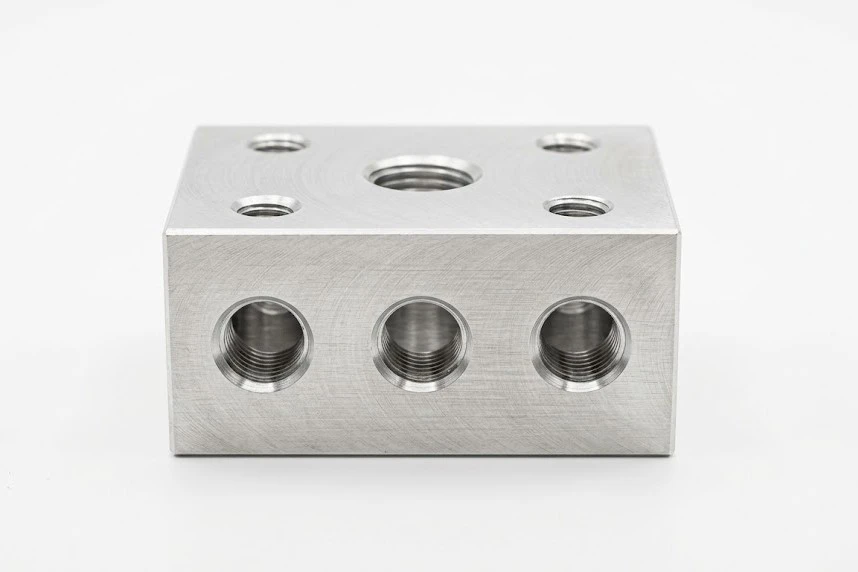
Tapped Blocks & Bars
Manifolds, anchors, and structural connection points are made of solid threaded blocks and bar stock.
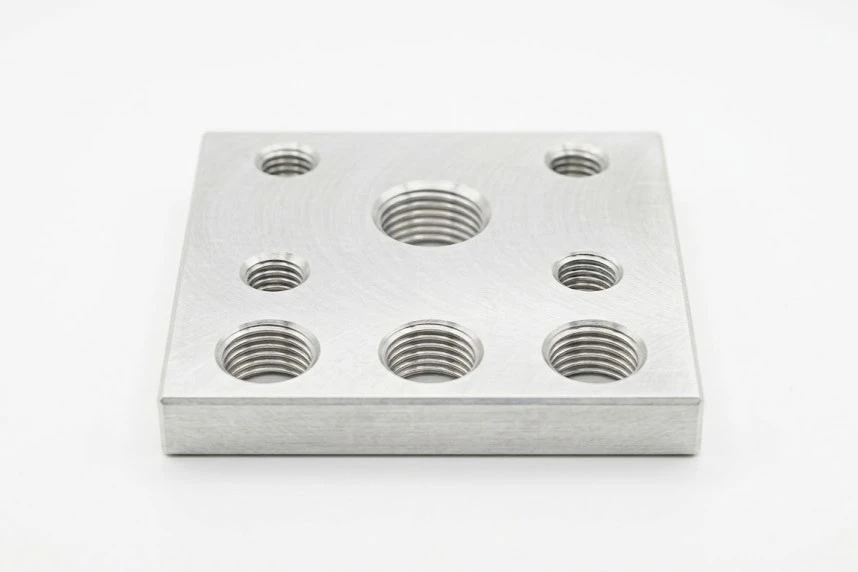
Tapped Plates & Brackets
Mounting brackets and flat threaded plates with fasteners that thread straight into the component without the need for a nut.

Tapped Housings & Enclosures
Machined enclosures and housings having internal threads for installed hardware, lids, and coverings.

Threaded fittings and connectors
Such as tapered pipe-thread components for sealed hydraulic and pneumatic connections, are referred to as tapped fittings and connectors.

Insert-Ready Components
These are parts that are pre-threaded for wire-thread inserts, such as Heli-Coil/STI, which are frequently used to strengthen threads in aluminium housings.

Multi-Hole Threaded Arrays
Plates, trays, and panels with thick patterns of precisely placed tapped holes

Thread Features in Our Components
Beyond the thread size itself, what defines a good tapped component is how cleanly and reliably the threads are formed into the finished part:
| Feature | Description |
| Blind & Through Threads | Controlled-depth or through-part threading. |
| Clean Thread Profiles | Accurate pitch, depth, and fit. |
| Insert-Ready Threads | Prepared for thread inserts and reinforcement. |
| High-Density Patterns | Closely spaced, precision-positioned threads. |
Need exact thread standards, size ranges, and tolerance classes? Those are detailed on our On-Demand Tapping Services page - your components can be made to any of them.
Choosing the Right Tapped Component
Specifying threaded parts is easier when you start from the requirement:
* By hole type - Blind holes for sealed or single-sided parts; through holes for full-depth access.
* By load requirement - Match thread engagement to the load; roughly 1–1.5× the bolt diameter is sufficient for full strength.
* By material - Choose for weight, strength, corrosion resistance, or cost.
* By thread standard - Metric, UNC/UNF, or tapered pipe threads to match your existing hardware.
* By assembly need - Standard threads for typical fasteners, or insert-ready threads for soft metals and high-cycle joints.
Not sure which combination fits? Send your drawing and our team will recommend the right configuration.

Thread Fit
Thread quality lives and dies by tolerance control. We tap to standard tolerance classes such as 6H for internal threads, ensuring a correct Class 2 fit with common fasteners. Mismatched tolerance grades cause loose or interference fits and premature thread failure-so we verify fastener tolerance before tapping and confirm results with Go/No-Go gauges.
Materials We Tap

These components can be machined and tapped in aluminum, stainless and carbon steel, brass and copper, titanium and high-strength alloys, and engineering plastics. For the full grade list and the tapping method used for each material, see our On-Demand Tapping Service page.
How We Ensure Thread Quality in Every Part
Our machining centers integrate tapping directly into the cutting cycle, so threads are formed in the same setup as the part - no secondary handling, and better alignment. For each component we control:

Rigid tapping for precise depth control and thread positioning

Chip evacuation in deep blind holes, where chips can otherwise pack and break tools

Correct drill-to-tap hole sizing, since even a ±0.2 mm deviation shifts torque and thread quality
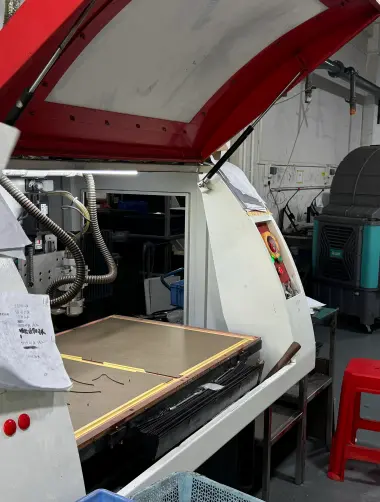
Thread depth held within the 3× tap-diameter guideline for repeatable results
Industries
Precision tapped components are critical wherever fasteners meet machined parts:
Robotics
actuator housings and mounting hardware

Medical Devices
precision instrument and equipment housings

Sports
lightweight equipment components and fittings
Outdoor
rugged gear built for repeated assembly
Component Gallery
Examples of tapped components we've produced, organized by part type:

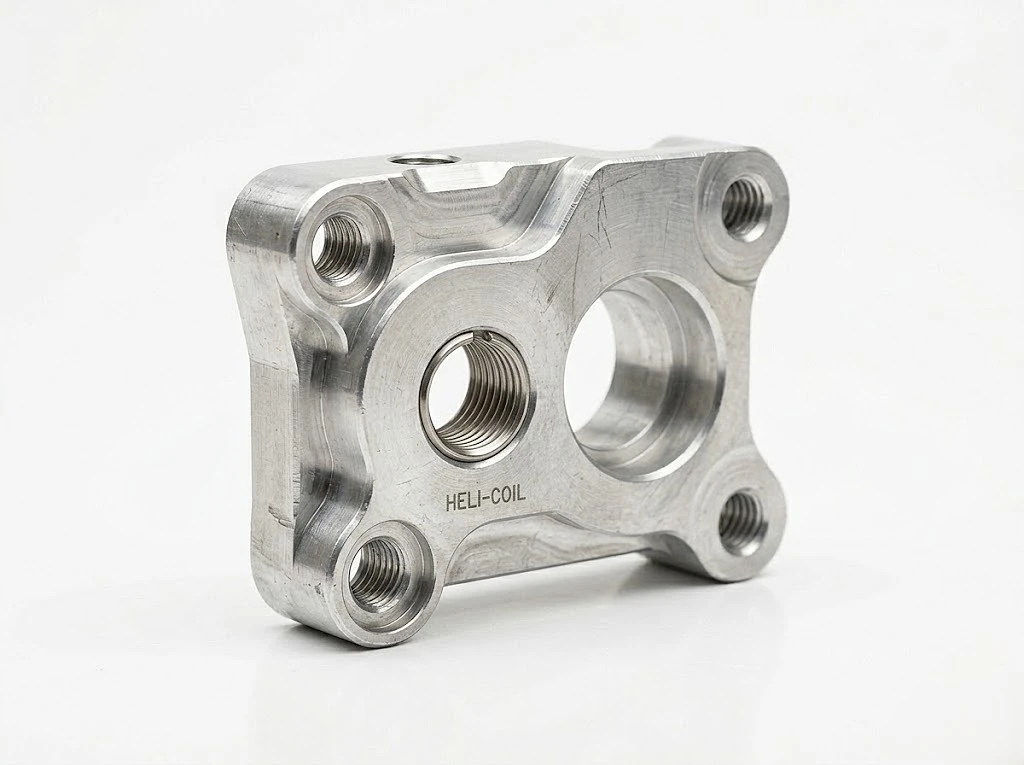
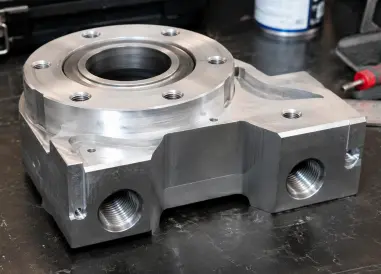
Threaded aluminum housing - multiple blind tapped holes; hard-anodized finish.
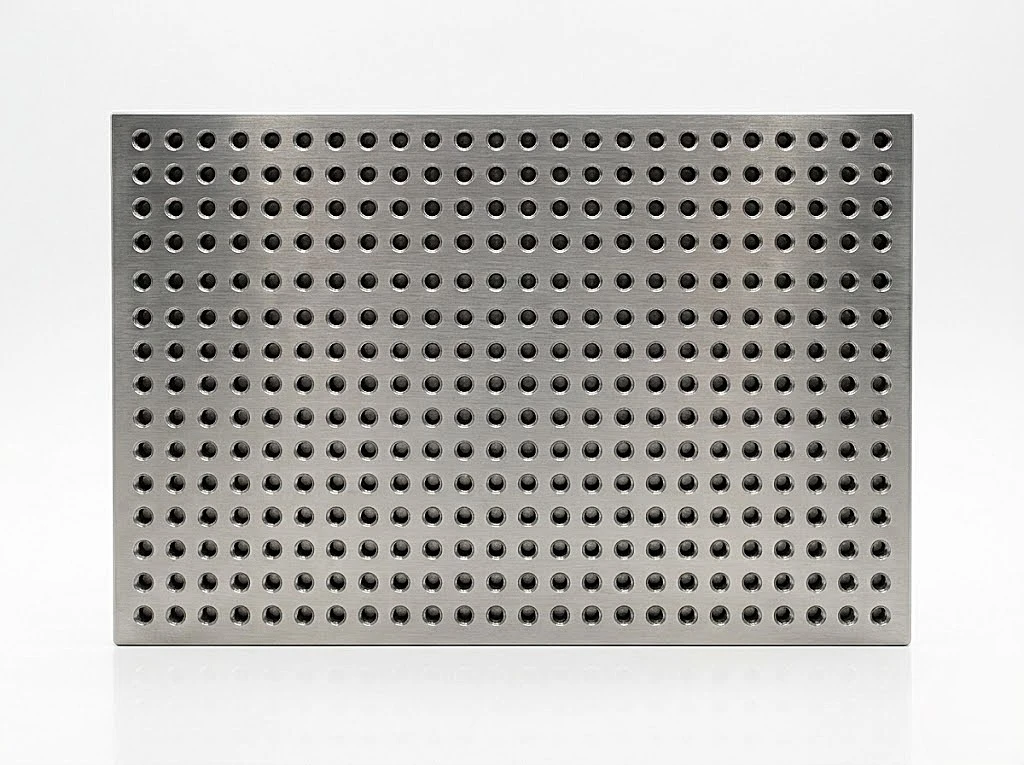
Multi-hole threaded plate - high-density tapped array for panel mounting.
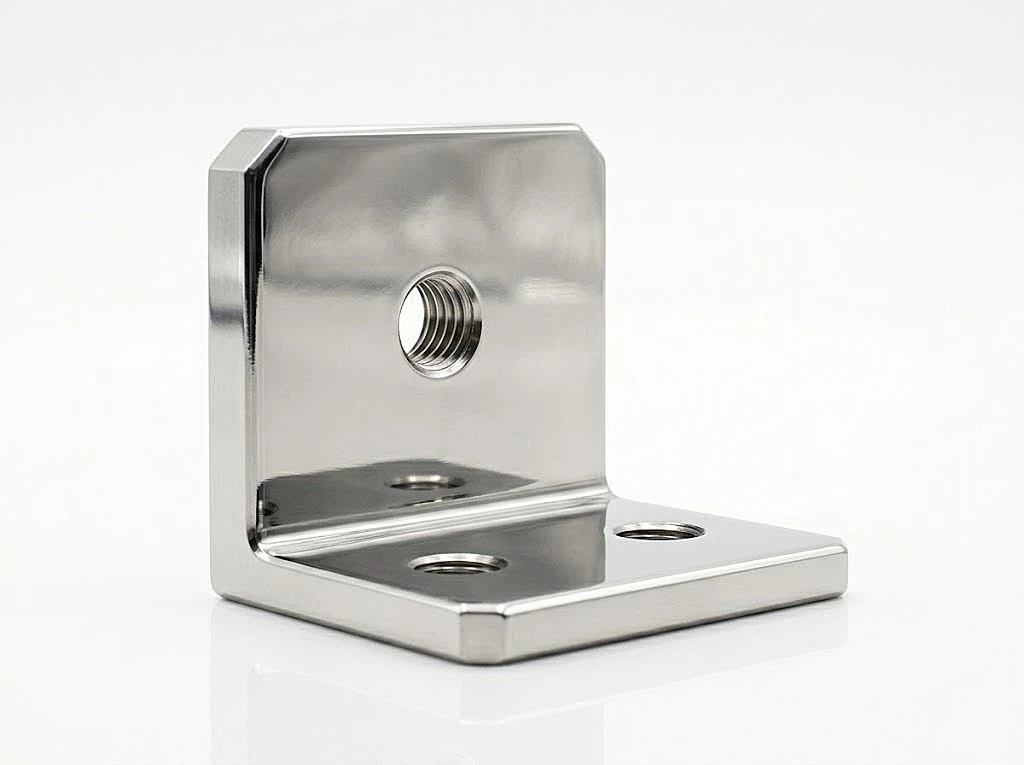
Stainless steel tapped bracket - through-hole threads for structural assembly.
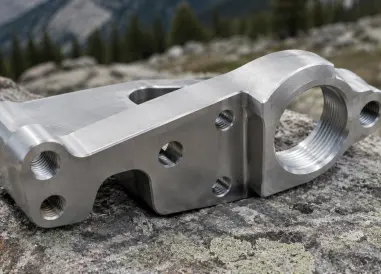
Insert-ready aluminum component - STI threads prepared for wire inserts.
Related CNC Machining Services
FAQ
Q: What distinguishes a threaded hole from a tapped hole?
A: A tapped hole, which holds fasteners without a separate nut, has threads that are cut straight into the material by a tap. Any hole having internal threads is referred to as a "threaded hole"; tapping is one of the main methods for creating them.
Q: Which thread diameters are available for tapping?
A: We use tapered pipe threads (NPT/BSP) and a broad variety of standard and bespoke diameters in metric (M) and imperial (UNC/UNF) systems.
Q: Is it possible to tap blind holes?
A: Yes, our strict tapping procedure and tap geometry are designed to manage the precise chip evacuation and depth control needed for blind-hole tapping.
Q: What is the minimum thread depth that is advised?
A: A thread engagement of roughly 1–1.5× the bolt diameter is adequate for the majority of applications; engagement beyond that provides minimal strength. For dependability, we maintain thread depth within about 3× the tap diameter.
Q: Are thread inserts available for worn or stripped threads?
A: Yes, we offer STI tapping for wire-thread inserts (like Heli-Coil), which are frequently used to strengthen or fix aluminium threads.
Hot Tags: cnc tapped components for reliable threaded assemblies, China cnc tapped components for reliable threaded assemblies manufacturers, suppliers, factory, CNC Lathe Milling Machining Parts Service, CNC Machine Setups and Parts Orientation, CNC Machining Of Metal Parts, CNC Machining Services Apply To Parts Made Of Various Metals Materials, Precision Machining Services for Metal Mechanical Parts, The Machining Process and Differences Of 3 axis 4 axis and 5 axis CNC


